Key Takeaways:
- Growth charts are guides, not diagnoses: They help track trends in child growth over time but should always be interpreted alongside professional medical advice.
- Percentiles measure patterns, not performance: A child’s percentile reflects comparison to peers, with consistency over time being more important than the specific number.
- Every child’s growth path is unique: Genetics, nutrition, sleep, health, and environment all influence growth, making individual variation completely normal.
Is your child’s growth chart something to trust, or just a rough sketch of what might happen? For many parents, those lines and percentiles can feel like a weather forecast for the future: helpful at a glance, but not always easy to interpret on a day-to-day basis. One month, everything looks “normal,” the next you’re wondering if a slight dip or spike means something more, or nothing at all.
At Headwaters Studio, we’ve seen firsthand how each little line can turn into a lasting piece of family history. Our own journey began with a simple wish: to capture our children’s stories in a way that could move with us, from house to house, generation to generation. Along the way, we learned that accuracy isn’t just about numbers; it’s about trusting that each memory, each mark, and each milestone truly matters.
In this piece, we’ll explain how accurate growth charts really are, how to interpret percentiles, what height predictions can (and can’t) tell you, and when parents should, or shouldn’t, worry.
How Accurate Are Growth Charts For Tracking Childhood Development?
Growth charts do more than just mark inches; they offer parents and caregivers key insights into a child’s growth journey. But just how precise and reliable are these tools for tracking childhood development? Let’s break it down:
What Growth Charts Measure
Growth charts are designed to plot a child’s height (and sometimes weight) against standardized percentiles developed by medical experts. These percentiles reflect the typical ranges for children of the same age and sex, helping to identify patterns and ensure development is on track.
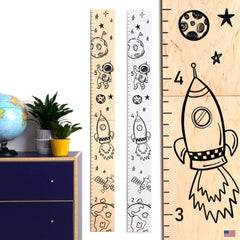
For parents who want to keep these records at home, using a professional-grade child height chart ensures that your home measurements align with the quality used in clinical settings.
Factors Influencing Accuracy
Factors such as measurement consistency, posture, and equipment can all impact a chart’s accuracy. Measuring at the same time of day, on a flat surface, and using the same chart each time helps ensure more reliable results.
The Role Of Genetics And Individuality
No two children grow at the same pace. Genetics, nutrition, sleep, and even emotional well-being play a role in individual growth patterns. Growth charts, like our boy's growth charts, provide a helpful reference, but natural variations are entirely normal.
Growth Charts As A Guide, Not A Diagnosis
While growth charts can highlight trends worth discussing with a pediatrician, they’re not diagnostic tools. They’re best used as a supportive guide in partnership with professional medical advice, offering families both peace of mind and a beautiful way to record a child’s milestones.

How To Interpret Growth Charts: Understanding The Curves
Growth charts can seem complex at first glance, but with a little context, their story unfolds clearly; they are simply visual maps of how children grow over time. Whether you are marking a girl's growth chart or a boy's version, here’s how you can make sense of the curves and what they really mean for your child’s journey.
The Percentiles: More Than Just A Number
Percentiles aren’t about ranking kids against one another. Instead, they provide reference points, showing where a child’s height or weight falls in relation to their peers. For instance, if your child is in the 50th percentile for height, half of kids their age are taller, and half are shorter. It’s not a race upward, but an indicator of where your child stands within a broad, healthy range.
The Shape Of Growth: Watching the Patterns
Growth isn’t perfectly linear; all children grow at their own rhythm. Growth chart curves reflect this natural ebb and flow, with periods of rapid growth followed by slower phases. What matters most is not adhering to the same percentile, but maintaining a consistent pattern that is unique to each child.
Interpreting Change: When To Pause And Reflect
A sudden shift in the curve, either a steep climb or a sharp drop, may catch your attention. This can be a sign to consult a pediatrician. Growth can be influenced by a variety of factors, including genetics, nutrition, and even a recent illness. The important thing is to view the chart as a guide, helping families and clinicians see the bigger picture rather than focusing on a single data point.
What Do Percentiles Mean On Growth Charts?
When you look at a growth chart, the percentile is a way of comparing your child’s height or weight to a large, representative group of children of the same age and gender. It is essentially a ranking system.
Understanding The Ranking
If your child is in the 50th percentile for height, it means that out of 100 children, 50 are taller than your child and 50 are shorter. They are exactly at the median height for their age.
- 75th Percentile: Your child is taller than 75% of their peers and shorter than 25%.
- 10th Percentile: Your child is taller than 10% of their peers and shorter than 90%.
Why The "Curve" Matters More Than The Number
Pediatricians are rarely concerned with a specific percentile number itself. Whether a child is in the 5th or 95th percentile isn't necessarily a sign of health or illness; being "small" or "large" is often just a matter of genetics. Many families prefer the classic aesthetic of ruler growth charts to visualize this curve clearly as the years pass.
The real value of the percentile is the trend over time:
- Following the Curve: If a child starts at the 25th percentile and remains consistently near that line as they grow, they are likely growing at a rate that is exactly as it should be.
- Deviating from the Curve: A "red flag" occurs if a child suddenly jumps from the 50th percentile down to the 5th, or up to the 95th. This change in the pattern, rather than the percentile itself, is what prompts doctors to look closer.
A Tool, Not A Grade
It is helpful to remember that percentiles are not "grades." A child in the 90th percentile isn't "healthier" or "better" at growing than a child in the 10th percentile. At Headwaters Studio, we see these markings as a way to celebrate your child's unique path. Every mark on your chart is a record of their individual story, regardless of where they sit in relation to the national average.

When Should Parents Worry About Growth Charts?
Growth charts are a trusted resource, but it's natural for parents to wonder when those numbers on the ruler might signal something more. Understanding when to pause and when to seek guidance can bring reassurance as you watch your child grow, one mark at a time.
Consistent Drop In Growth Percentile
If a child’s height or weight consistently shifts down two major percentile lines over time, it’s worth discussing with your pediatrician. Occasional jumps or dips can happen, but a repeated downward trend may indicate an underlying health concern.
Crossing Percentile Curves Rapidly
A rapid climb or drop across percentile curves, primarily if it occurs over several measurements, may signal growth or metabolic issues. This is particularly important if accompanied by other symptoms, such as fatigue or changes in appetite.
Plateauing Height Or Weight
If your child completely stops gaining height or weight for several months (outside of expected adolescent pauses), it can be a sign that something’s off. Growth typically follows a steady, if sometimes slow, rhythm, and prolonged plateaus deserve a closer look.
Symptoms Accompanying Growth Changes
Growth fluctuations paired with symptoms such as persistent vomiting, diarrhea, or developmental delays should prompt a call to your healthcare provider. Health professionals can determine if further action is necessary.
Genetic Factors And Family History
Sometimes, unusual patterns are simply a reflection of family height trends or inherited growth patterns. However, if your child’s growth falls significantly outside the expected range for your family or community, a professional can help identify any underlying issues.
Factors That Influence Your Child’s Unique Growth Pattern
Every child follows their own distinct path in terms of growth. It’s a journey shaped not just by genetics, but by a constellation of experiences, circumstances, and environments. While growth charts provide helpful guidelines, numerous factors can influence how and how quickly kids grow.
- Genetics: The most significant influence tends to be the family tree. Parents’ and grandparents’ heights, builds, and even growth timelines often echo down through generations, shaping a child’s own trajectory.
- Nutrition: What goes into a child’s body has a profound impact on growth. Proper, balanced nutrition, rich in whole foods, protein, calcium, vitamins, and minerals, can fuel healthy growth. Even subtle deficiencies or challenges with food can sometimes slow a child’s progress along the chart.
- Sleep and Rest: Growing bodies do much of their growth and development during sleep. Nighttime is when growth hormone is most active, so restful, consistent sleep is key to helping children reach their full potential.
- Health and Wellness: Illnesses, chronic health conditions, or even certain medications can temporarily slow a child’s progress. Conversely, periods of robust health often coincide with rapid spurts of growth.
- Emotional Environment: The atmosphere in which a child grows is also essential. A stable, loving environment can spark not just emotional but physical well-being. Kids are more likely to thrive if they feel safe, supported, and nurtured.
- Activity and Play: Movement is more than just fun; it’s an essential part of healthy development, from running and jumping to simply exploring the world around them.
Together, these factors make each child’s growth story uniquely their own, full of its own rhythms, pauses, and joyous leaps. The lines on a growth chart may help us measure inches, but the experiences between the marks are where the real story unfolds.

Final Thoughts
Growth charts are valuable tools, but they’re not crystal balls. They work best when viewed as part of a bigger picture, one that includes genetics, health, environment, and the everyday moments that shape a child’s life. Rather than focusing on exact numbers or percentiles, parents can find reassurance in consistent patterns over time and use growth charts as a means to observe, reflect on, and celebrate their child’s unique journey. Each mark tells a story, not just of how tall a child has grown, but of the memories made along the way.
Frequently Asked Questions: How Accurate Are Growth Charts?
Are growth charts reliable for all children?
Growth charts are reliable reference tools for most children, providing families and healthcare providers with valuable insights into growth patterns. However, every child is unique, and individual differences, like growth spurts or medical conditions, can mean that some children may not follow the chart exactly.
What factors affect the accuracy of growth charts?
Several factors can influence accuracy, including genetics, nutrition, health conditions, and environmental changes. Additionally, how and when measurements are taken can affect results; consistent technique is key to capturing an accurate picture.
Do growth charts differ between countries?
Yes, growth charts can differ around the world. Charts are typically based on data from local populations, so growth standards in one country may not match those in another due to differences in genetics, diet, and environment.
Do genetics affect the accuracy of growth charts?
Yes. Genetics plays a significant role in determining how a child develops; height, build, and growth pattern are all influenced by family history. Growth charts provide general trends, but your child’s genetic roadmap can bring its own twists and turns.
How often should a child be measured for accurate charting?
For the most accurate record, measuring your child two to four times a year is ideal, especially during those early, fast-growing years. Consistent timing helps you notice trends and celebrate even the quiet milestones.
Are there different charts for boys and girls?
Our boys’ and girls’ growth charts differ only in their designs. Both offer the same simple way to track your child’s height and milestones over time.