Key Takeaways:
- Every Child Follows Their Own Growth Story: Understanding average heights helps contextualize development, but individual patterns matter more than exact numbers.
- Consistent Tracking Creates Meaningful Records: Recording your child's growth journey captures family history and helps identify their unique development path.
- Growth Monitoring Goes Beyond Medical: Height tracking becomes a cherished family tradition that documents childhood milestones in your home.
Two years old is a season of sudden change, pants that fit last month don’t anymore, shoes get tight overnight, and parents start noticing every inch gained or missed. When growth seems to happen in bursts, it’s natural to wonder what’s typical and whether your child is on track compared to the average height for a 2-year-old boy.
At Headwaters Studio, growth isn’t an abstract number to us; it’s something we see marked in real homes, year after year. As a family-run studio handcrafting personalized growth charts, we’ve helped thousands of parents track height consistently, notice patterns over time, and turn everyday measurements into meaningful records. Our experience lives at the intersection of practical growth tracking and family life, not clinical charts alone.
In this piece, we’ll walk through the average height for a 2-year-old boy, explain why variation is normal, and share how parents can track growth at home with clarity and confidence.
How Pediatric Growth Averages Are Calculated
The average height for a 2-year-old boy is based on extensive data collected from thousands of children. These measurements help establish growth charts for toddlers that pediatricians use during well-child visits.
Where Growth Data Comes From
Medical organizations like the Centers for Disease Control and Prevention (CDC) and the World Health Organization (WHO) collect height and weight measurements from diverse populations. The CDC 2000 growth charts were constructed from nationally representative health examination surveys, including data from multiple NHES (National Health Examination Survey) and NHANES (National Health and Nutrition Examination Survey) cycles ( CDC, 2024)
These large-scale studies track children from birth through adolescence, creating standardized references that account for age and sex through statistical modeling and smoothing techniques.
Understanding Percentiles and Ranges
Growth charts display percentile curves that show how a child's measurements compare with those of others of the same age. A child at the 50th percentile for height means half of the children that age are taller, and half are shorter. Clinicians often consider a wide range as potentially healthy, commonly using the 3rd to 97th percentiles as a broad reference band (though WHO charts display approximately the 2nd to 98th percentiles, corresponding to about ±2 standard deviations). ( CDC, 2010) These percentiles help identify patterns rather than define what's "normal" or "abnormal," and should always be interpreted in the context of each child's individual growth curve.
Why Averages Serve as Guidelines
The average height for a 2 1/2-year-old boy serves as a reference point, not a target. Every child carries their own genetic blueprint that influences their growth trajectory. Some children naturally fall above or below average while remaining perfectly healthy. Pediatricians look at whether a child is following their own consistent growth curve over time, which matters more than any single measurement.

Why Height Can Vary At Age Two
Two-year-old boys show remarkable height variation, and understanding these differences helps parents appreciate their child's individual development.
Genetic Influences on Toddler Height
A child's height is primarily determined by parental genetics. Tall parents typically have tall children, while shorter parents often have shorter children, though exceptions occur. Genetic factors account for approximately 60-80% of variation in adult height at the population level ( Scientific American, 2006). Your child inherits height potential from both sides of the family, sometimes skipping generations or favoring one parent's lineage over the other.
Nutritional Impact During Growth Years
Adequate nutrition during the toddler years supports optimal growth. Children need balanced diets with sufficient protein, calcium, vitamin D, and other essential nutrients. Poor nutrition may temporarily slow growth, while good nutrition allows children to reach their genetic potential. However, overfeeding doesn't make children taller; genetics sets the ultimate limit.
Medical Conditions That Affect Growth
Certain health conditions can influence a toddler's height. Chronic illnesses, hormonal imbalances, or digestive disorders that affect nutrient absorption may slow growth. Most children grow normally, but significant deviations from their established growth curve warrant pediatric evaluation. Early intervention for medical issues often allows children to return to their expected growth pattern.
How To Measure A 2-Year-Old Boy's Height Accurately At Home
Taking accurate height measurements at home creates a meaningful record while helping you track your child's development between pediatric visits.
Preparing for an Accurate Measurement
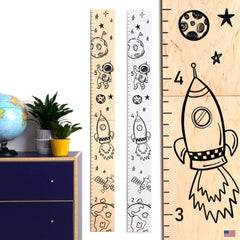
Measure at roughly the same time of day for consistency. Have your child stand against a flat wall without baseboards or molding that could affect the measurement. To ensure the most precise reading, many parents install a growth chart ruler. This provides a fixed, professional-grade scale that eliminates the guesswork of using a handheld tape measure.
Note that at age 2, pediatric practices transition from measuring recumbent length (lying down) to standing height (stature), and the CDC recommends switching from WHO charts to CDC charts at this age ( CDC, 2024).
Proper Standing Position
Your toddler should stand with heels together against the wall, looking straight ahead. The head, shoulders, buttocks, and heels should all touch the wall. Many two-year-olds find it challenging to stand completely still, so patience helps. Some parents make it fun by turning it into a game or special routine.
Marking and Recording the Height
Place a flat object, such as a book, on your child's head, parallel to the floor. Record the measurement with the date. If you are tracking a son, using a dedicated toddler boy growth chart is a wonderful way to see how he compares to average developmental milestones for his age.

What Growth Patterns Matter More Than Exact Numbers
Understanding growth velocity gives you a more complete picture of your child's development than a single number ever could.
- Consistency Over Totals: Pediatricians focus on whether your child follows a steady trajectory. Whether you are using a toddler girl growth chart or one for a boy, staying within the same percentile is generally a sign of healthy development.
- Velocity Expectations: After age two, children typically grow 2-3 inches per year. Tracking these changes every few months on a toddler height chart lets you observe growth spurts firsthand.
- Proportionality: Height should be considered alongside weight. Maintaining similar percentiles across all measurements typically indicates healthy, balanced growth.
When Parents May Have Questions About Growth
Most variations in toddler height are completely normal, but certain situations warrant professional guidance to ensure your child is developing healthily.
Significant Deviation from Growth Curve
If your child's height suddenly changes percentiles dramatically, either jumping up or dropping down several curves, your pediatrician should evaluate the situation. This doesn't necessarily indicate a problem, but it warrants investigation. Temporary illnesses can cause short-term growth slowdowns, while other factors might need medical attention. Consistent tracking helps identify these patterns early.
No Growth Over Extended Periods
While growth happens in spurts, a child who shows minimal height increase over six months or more should be evaluated. Growth plateaus beyond typical variation might indicate nutritional deficiencies, chronic illness, or hormonal issues. Early detection allows for intervention when most effective. Your home measurements between appointments can help identify these patterns.
Extreme Height Differences from Family Pattern
When a child's height differs dramatically from what family genetics would predict, consultation helps rule out medical causes. A very short child from tall parents, or vice versa, might simply represent genetic variation. However, ruling out growth hormone deficiencies or other conditions provides peace of mind and addresses potential issues early.
Additional Developmental Concerns
Height concerns combined with other developmental delays, poor weight gain, or chronic health issues require a comprehensive evaluation. Growth is one aspect of overall development, and multiple concerns together merit professional assessment. Most children are perfectly healthy, but a thorough evaluation ensures nothing is overlooked when parents have multiple worries.
Tracking Your Child's Growth As A Meaningful Family Record
Beyond medical monitoring, recording your child's height creates a tangible connection to childhood memories and family history that becomes more precious over time.
Creating Daily Rituals Around Measurement
Many families establish traditions around height measurements, birthday measurements, first-day-of-school recordings, or seasonal check-ins. These rituals transform a simple measurement into a meaningful moment of connection. Your child learns to appreciate their growth while understanding they're part of a family story that values these milestones. The act of standing against the wall, waiting for the mark, becomes a cherished memory itself.
Visual Documentation in Your Home
A wooden growth chart displayed prominently in your home serves as both a functional tracking tool and beautiful decor. Unlike medical charts that stay filed away, a handcrafted growth chart becomes part of your daily environment. You see it as you pass through hallways, reminding you of how quickly these years move. The marks accumulate into a visual story that guests notice and admire, sparking conversations about childhood and growth.
Comparing Siblings and Generations
When you have multiple children, comparing their growth patterns on the same chart creates sibling connections. You might discover that your younger son is following his older brother's exact pattern, or notice interesting differences between them. Some families even compare their children's heights to their own childhood measurements, creating multi-generational connections that celebrate family similarities and differences.
Transitioning Growth Records into Keepsakes
The measurements you take today transform into tomorrow's treasured memories. When your two-year-old is twenty, those pencil marks or recorded heights become powerful reminders of how far he's come. Many parents photograph their growth charts as children grow, creating visual timelines. Others preserve the actual charts, passing them down as family heirlooms that future generations can appreciate. The simple act of tracking height becomes part of your family's legacy.
Building Confidence Through Progress
As children grow older and can understand their measurements, seeing their upward progress builds confidence and self-awareness. They learn that growth takes time and happens gradually. The visual representation of their development helps them understand change in concrete terms. This creates opportunities for conversations about patience, development, and celebrating who they are at every stage.

Final Thoughts
Understanding what the average height for a 2-year-old boy, approximately 34-35 inches depending on measurement method and reference charts, provides helpful context for your child's development, but remember that every child writes their own growth story. The measurements you take today serve dual purposes: they help you monitor healthy development while creating irreplaceable family records. Whether your son measures near the median or falls above or below, his consistent growth pattern matters more than any single number. These fleeting years pass quickly, and thoughtful tracking captures everyday moments as lasting memories.
At Headwaters Studio, we're honored to help families preserve these precious milestones with handcrafted pieces that celebrate your unique story. You make the memories, and we help you record them in ways that will bring beauty to your home and meaning to your family for generations to come.
Frequently Asked Questions About The Average Height For 2 Year Old Boys
What height range is considered normal for 2 year old boys?
A wide range can be healthy for 2-year-old boys. Clinicians often assess growth using roughly the 3rd to 97th percentiles (or WHO's approximately 2nd to 98th percentile display cutoffs) as a broad reference band. Children growing consistently within their individual percentile curve are developing healthily, regardless of where they fall in this range. The specific measurements depend on whether WHO length-for-age or CDC stature-for-age charts are used, and whether the child is measured lying down or standing.
How much do boys typically grow between ages 2 and 2.5?
Boys often grow about 1 to 1.5 inches from age 2 to 2.5, which aligns with the typical growth rate of roughly 2-3 inches per year after age 2. Growth happens in spurts rather than uniformly, so individual variation is normal.
What factors influence how tall my toddler will be?
Genetics is the primary factor, accounting for approximately 60-80% of height variation at the population level. Parental heights strongly predict a child's eventual height, though variation occurs. Nutrition, overall health, sleep quality, and medical conditions also play roles in whether a child reaches their genetic height potential.
How does nutrition affect my toddler's growth and height?
Adequate nutrition allows children to reach their genetic height potential. Protein, calcium, vitamin D, and balanced nutrients support bone growth and development. Poor nutrition may temporarily slow growth, but proper nutrition cannot make a child taller than their genetic blueprint allows.
How can I track my child's growth at home?
Measure your child against a flat wall without shoes, ensuring heels, buttocks, shoulders, and head touch the wall. Mark the height, record the date, and take measurements every few months at roughly the same time of day for consistency. A wooden growth chart provides a beautiful, permanent way to document these milestones. Note that pediatric practices transition from measuring length (lying down) to standing height at age 2.
Why is it important to monitor my toddler's height development?
Tracking height helps identify growth patterns and potential medical concerns early. It also creates meaningful family records that celebrate your child's journey. Consistent monitoring between pediatric visits provides a complete picture of your child's development over time, showing whether they're following their own consistent growth curve.
Sources:
- CDC. (2024, September 25). 2000 CDC Growth Charts: Features and Data. Growth Chart Training. https://www.cdc.gov/growth-chart-training/hcp/overview/features-and-data.html
- Use of World Health Organization and CDC Growth Charts for Children Aged 0--59 Months in the United States. (2010). Www.cdc.gov. https://www.cdc.gov/mmwr/preview/mmwrhtml/rr5909a1.htm
- Lai, C.-Q. (2006, December 11). How much of human height is genetic and how much is due to nutrition? Scientific American. https://www.scientificamerican.com/article/how-much-of-human-height/