Key Takeaways:
- Average height is a range, not a fixed number. The average height of a 6-year-old girl is about 45.4 inches, but healthy girls can range from the low 40s to nearly 49 inches, and consistent growth along any percentile curve is what pediatricians look for most.
- Genetics and lifestyle both shape your daughter's height. Around 80% of height variation is genetic, but nutrition, quality sleep, and regular physical activity all help children reach their full growth potential during these critical early years.
- Tracking growth at home builds both records and memories. Measuring your daughter every few months between pediatrician visits helps you spot meaningful patterns early, and a dedicated growth chart turns those numbers into a lasting family keepsake that no painted-over wall ever could.
Your daughter just turned six, and suddenly everyone has an opinion about how tall she is, or isn't. Her classmates seem taller, her cousin, the same age, is shorter, and you find yourself wondering whether she's right on track or whether there's something worth paying attention to. Height comparisons are almost unavoidable at this age, but knowing what's actually normal makes all the difference between unnecessary worry and genuine peace of mind.
At Headwaters Studio, we've spent years helping families preserve these fleeting moments of growth. As the creators of handcrafted growth charts designed to become family heirlooms, we understand that tracking height is about more than comparing numbers; it's about marking the passage of time and keeping the story of childhood alive, even as life moves from home to home, chapter to chapter.
In this piece, we'll explore the average height for a 6-year-old girl, what factors influence how tall your daughter grows, how growth charts work, when to talk to your pediatrician, and practical ways to track these precious milestones at home.
Understanding Growth Percentiles
The average height for a 6-year-old girl in the United States is approximately 45.4 inches, or about 3 feet 9 inches tall. However, pediatric growth is measured on a range rather than a single number, and healthy girls at this age typically measure anywhere from the low 40s to about 49 inches, depending on where they fall on standard growth charts.
Growth percentiles provide context rather than judgment. A girl measuring around 42 inches might fall near the 3rd percentile, while one measuring 49 inches could be near the 97th percentile; both are typically within normal ranges for healthy development.
What matters more than any single measurement is whether your daughter is following a consistent growth pattern over time. Pediatricians look for steady progress along a particular growth curve rather than expecting every child to hit the exact average.
Individual Variation Is Normal
Some girls are naturally petite, while others are taller from birth. These differences reflect the beautiful diversity of human genetics and development. Your daughter's height at age 6 tells only part of her growth story; it doesn't predict her final adult height or define her health status on its own.

Average Height For A 6½ Year Old Girl: What Changes In Six Months?
Many children grow roughly an inch over six months at this age, so a typical 6½-year-old girl may be about an inch taller than at her 6-year visit, though exact averages depend on age in months. This represents the steady, predictable growth pattern typical of early childhood, faster than the slower pace of later elementary years, but calmer than the dramatic spurts of infancy or puberty.
Growth Happens Gradually, Then All at Once
Six months might bring subtle daily changes, pants that gradually creep up the ankle, sleeves that slowly expose more wrist. Then one morning, you'll realize she's standing eye-level with the kitchen counter she once couldn't see over, and those six months will feel like they passed in a breath.
Seasonal Growth Patterns
Studies have observed seasonal variation in growth rates in some settings, but the size and timing of the effect can vary and aren't reliable for predicting an individual child's growth. While individual variation makes this difficult to predict for any specific child, you might notice your daughter seeming to "shoot up" during certain times of year.
What Factors Influence A 6-Year-Old Girl's Height?
Height results from a complex interaction of genetic inheritance, nutritional intake, sleep quality, physical activity, overall health, and environmental factors. Understanding these influences helps parents support healthy growth while recognizing what's within their control and what simply unfolds according to each child's unique blueprint.
Genetics: The Biggest Factor
Your daughter's height is primarily determined by the genes she inherited from both sides of her family. Research indicates that about 80% of the variation in height within a population is attributable to inherited genetic factors. If you and your partner are both tall, she's more likely to be tall. If both parents are short, she'll follow a similar pattern. However, genetics can skip generations or combine in unexpected ways, so siblings often vary in height even within the same family.
A rough formula some pediatricians use to estimate adult height is calculated as ((father's height − 5 inches) + mother's height) / 2 for girls. This "mid-parental height" provides only a general range; genetic variation means your daughter could end up several inches taller or shorter than this estimate.
Nutrition and Diet
Proper nutrition provides the building blocks for growth, particularly protein for tissue development, calcium and vitamin D for bone health, and sufficient overall calories for energy. Children who don't receive adequate nutrition may grow more slowly than their genetic potential would otherwise allow.
That said, overfeeding doesn't make children grow taller; it simply affects weight. Height follows genetic programming when basic nutritional needs are met consistently over time.
Sleep Quality and Duration
Growth hormone is primarily released during deep sleep, making consistent, quality rest essential for normal development. Children ages 6–12 years need 9 to 12 hours of sleep per 24 hours. Children who regularly get insufficient sleep may experience slightly slower growth compared to well-rested peers.
Physical Activity
Regular physical activity supports healthy growth by strengthening bones, building muscle, promoting good sleep, and stimulating the release of growth hormone. Active play, running, jumping, and movement help children reach their genetic height potential while building overall wellness.
Health Conditions
Certain medical conditions can affect growth patterns. Chronic illnesses, hormone imbalances, celiac disease, and some genetic conditions may slow height development. This is why pediatricians track growth over time; consistent measurements help identify potential health concerns early.

How Growth Charts For Toddlers And Early Childhood Work
Growth charts are tools that plot your child's height and weight over time and compare them with standardized data from thousands of children. Rather than providing a single "ideal" measurement, these charts show the range of normal growth and help doctors identify whether your daughter is developing consistently along her own growth curve.
What Pediatricians Look For
During well-child visits, your pediatrician plots your daughter's height on a growth chart and looks at the trend rather than any single point. Consistent growth along a particular percentile line indicates healthy development, even if that line represents the 10th or 90th percentile.
What concerns doctors more than being "tall" or "short" is when a child suddenly jumps from one percentile to a much higher or lower one without a clear explanation, or when growth slows or stops for an extended period. These pattern changes warrant further evaluation.
Understanding the Curves
Growth charts show curved lines representing different percentiles, typically the 3rd, 5th, 10th, 25th, 50th, 75th, 90th, 95th, and 97th percentiles. If your daughter falls on the 25th percentile line, it means 25% of girls her age are shorter than her, and 75% are taller. Both the 25th and 75th percentiles represent perfectly healthy growth.
Why Tracking Over Time Matters
A single height measurement tells you where your daughter stands at one moment. Multiple measurements over months and years tell the story of how she's growing, and that story matters far more than any individual number. If you want to explore all available formats before choosing, browsing our full toddler height chart collection helps you find the right style for your home and the milestones you most want to capture.
How To Track Your Daughter's Growth At Home Between Checkups
Measuring your daughter's height at home creates a tangible record of how quickly childhood passes, and those measurements become memories worth preserving long after she's grown. We've seen families pass down growth charts through generations, with grandparents pointing to faded pencil marks and sharing stories of when those lines were first drawn.
Creating a Consistent Measuring Routine
For accurate tracking, measure your daughter at roughly the same time of day (morning is best, as spines compress slightly throughout the day) and in bare feet with her back flat against the wall. Ask her to stand tall with heels, bottom, shoulders, and head touching the surface.
Use a flat object like a book or ruler held level above her head to mark the spot, then measure from the floor to your mark. Record the date and measurement on the wall itself, in a journal, or on a dedicated growth chart that moves with your family.
Why We Believe in Permanent Records
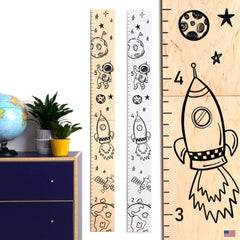
At Headwaters Studio, we create handcrafted growth charts specifically because we've learned that families move, walls get repainted, and pencil marks get erased, but the memories of childhood deserve to last. Our toddler girl growth chart collection is made from premium maple plywood with UV-cured inks designed to remain vibrant for generations, giving you a beautiful, permanent record that travels with your family from home to home.
When you mark your daughter's height on one of our charts, you're not just recording a number; you're capturing a moment in time that becomes part of your family's story. Years from now, she'll stand beside that same chart with her own children, showing them where she once stood at six years old.
Making Measurements Meaningful
Turn height tracking into a small ritual rather than a clinical exercise. Some families measure on birthdays or New Year's Day. Others pick the first day of school or special milestones. Whatever rhythm you choose, these moments of pausing to notice growth become anchors in the flow of busy family life. A classic growth chart ruler is one of the simplest ways to make measuring feel like a real ritual — mount it once, and it's ready for every birthday, first day of school, and milestone in between.
Involve your daughter in the process. Let her see the marks accumulate over time, talk about how tall she's getting, and celebrate the growth she's worked so hard to achieve through eating well, sleeping soundly, and playing actively. For families tracking a son's milestones alongside a daughter's, our toddler boy growth chart collection makes it easy to find a matching piece so every child in the family has their own lasting record.
Between Pediatrician Visits
Measuring at home between doctor appointments doesn't replace professional medical care, but it does let you stay connected to your daughter's development. Most families find that measuring every two to three months provides enough data to see progress without becoming overly focused on daily changes.
If you notice anything concerning between checkups, sudden growth spurts, unexpected slow periods, or other developmental changes, these home measurements give you concrete information to discuss with your pediatrician.

Final Thoughts
The average height for a 6-year-old girl is around 45.4 inches, but what truly matters is that she's growing steadily along her own unique curve. Genetics, nutrition, sleep, and overall health all play a role, and consistent tracking over time tells a far richer story than any single measurement. Every inch your daughter grows is a moment worth capturing, and at Headwaters Studio, our handcrafted growth charts are designed to hold those moments for a lifetime, moving with your family from home to home, and generation to generation.
Frequently Asked Questions: What Is The Average Height Of A 6 Year Old Girl?
How tall should a 6-year-old girl be?
Most 6-year-old girls measure between 40 and 49 inches tall, with the average around 45 inches. Healthy girls naturally fall anywhere within this range, depending on genetics and individual development.
Is 47 inches tall for a 6-year-old?
Yes, 47 inches is within the normal range for a 6-year-old girl, slightly above average but perfectly healthy. A girl this height would likely fall between the 75th and 90th percentile.
At what age are girls the tallest?
Girls typically reach their adult height between ages 14 and 16, after experiencing their major growth spurt during puberty (usually around ages 10-14). Growth usually continues at a slower pace into the late teens.
Why do some 6-year-old girls grow faster than others?
Genetics is the primary reason, as children inherit different growth timelines from their families. Nutrition, sleep quality, overall health, and individual developmental patterns also contribute to variations in growth rates among children of the same age.
Is my 6-year-old daughter's height within the normal range for her age?
If your daughter's height falls anywhere between the 3rd and 97th percentiles on standard growth charts (roughly the low 40s to about 49 inches), and she's growing consistently along her own curve, her height is likely normal for her genetic makeup.
How often should I measure my child's height at home?
Measuring every two to three months provides enough information to track growth patterns without becoming overly focused on daily changes. Many families also mark a child's height on special occasions, such as birthdays or the first day of school.