Key Takeaways:
- Every Child Grows At Their Own Pace: Understanding average ranges helps parents celebrate their child's unique development journey without unnecessary worry.
- Tracking Growth Creates Lasting Memories: Recording height milestones documents more than measurements; it captures fleeting childhood moments worth preserving.
- Context Matters More Than Numbers: Consistent growth patterns over time matter far more than hitting exact percentiles at any single checkup.
Watching your little one grow from a tiny newborn into an active, chattering two-year-old happens faster than any parent expects. One day, you're measuring onesies in months, and suddenly you're wondering if those pants will make it through another season. Understanding what the average height for a 2-year-old girl is helps families appreciate their child's development while creating meaningful records of these fleeting years.
Every inch your daughter grows tells part of her story, a story worth documenting in ways that last beyond memory alone. At Headwaters Studio, growth isn’t just a number to us; it’s a story. We’ve spent years helping families mark milestones with handcrafted growth charts designed to last a lifetime. By working closely with parents and focusing on long-term tracking, we understand how children grow in real life, not just on a percentile chart. That hands-on perspective gives us a grounded, practical view of toddler growth patterns and what “average” really means.
In this piece, we will walk through the average height for a 2-year-old girl, explain typical growth ranges, and share what parents should know when tracking healthy development over time.
Typical Height Ranges And Growth Percentiles
The average height for a 2-year-old girl at 24 months typically falls around 34.0 inches (86.4 cm) at the 50th percentile. However, healthy girls at this age can measure anywhere from approximately 31.6 to 36.4 inches (80.3 to 92.5 cm), which falls within the 3rd to 97th percentile range, and still be developing perfectly normally. These ranges reflect the beautiful diversity of human growth patterns.
Understanding Growth Chart Percentiles
Percentiles help pediatricians assess whether a child's growth follows expected patterns. If your daughter is in the 50th percentile for height, it means she's taller than 50% of girls her age and shorter than the other 50%. A child in the 10th percentile is shorter than 90% of peers but may be growing completely normally for her genetic blueprint.
What the Numbers Actually Mean
Growth charts for toddlers provide context rather than rigid standards. A girl consistently tracking along the 25th percentile who eats well, plays actively, and meets developmental milestones is thriving just as much as one in the 75th percentile. The key is consistency in her individual growth curve over time.
Regional and Population Variations
Average heights can vary based on ethnic background and family genetics. Some populations naturally trend taller or shorter on average, which is why pediatricians consider family history alongside standardized charts when evaluating growth. Clinicians primarily interpret a child's pattern in the context of parental heights and health history.

How Fast Do 2-Year-Old Girls Grow
Between ages one and two, most girls add approximately 4 to 5 inches (10 to 12 cm) to their height. This represents a significant slowdown from the first year of life, when infants typically grow about 9 to 10 inches, but it's still a remarkable pace of development.
Monthly Growth Expectations
Rather than steadily growing each month, toddlers often grow in spurts. Your daughter might seem to stay the same height for weeks, then suddenly shoot up seemingly overnight. This pattern is completely normal and reflects the natural process of human growth.
Comparing First and Second Year Growth
The dramatic deceleration in infant-to-toddler growth rates surprises many parents. While babies nearly double their birth length during year one, the second year brings more moderate increases. This slower pace continues through early childhood until the teenage growth spurt.
Factors That Can Affect A Toddler's Height
Multiple elements influence how tall your daughter grows during her toddler years. Understanding these factors helps parents support healthy development while appreciating their child's individual growth journey.
Genetics and Family History
Your daughter's height potential is largely determined before birth. If both parents are taller than average, their daughter will likely follow suit. Conversely, shorter parents typically have shorter children. Looking at grandparents and extended family provides additional clues about expected adult height.
Nutrition and Dietary Patterns
Adequate intake of calories, protein, calcium, and vitamin D supports optimal bone growth. Toddlers who eat balanced diets with plenty of fruits, vegetables, dairy, and protein sources have the nutritional foundation needed for healthy development. However, even well-nourished children vary considerably in height due to genetic factors.
Sleep Quality and Quantity
Growth hormone is primarily released during deep sleep, making consistent, quality rest essential for physical development. Most two-year-olds need 11-14 hours of total sleep each day, including nighttime sleep and naps.
Overall Health Status
Chronic illnesses, certain medications, or untreated conditions can sometimes affect growth rates ( CDC, 2024). This is why pediatricians monitor growth patterns over time rather than focusing on single measurements.
Physical Activity Levels
Active toddlers who run, climb, and play develop strong bones and muscles. While exercise doesn't directly increase height, it supports overall health and proper skeletal development.

When Height Variations Are Completely Normal
Most differences in toddler heights reflect natural human diversity rather than concerning issues. Understanding when variations are expected helps parents avoid unnecessary worry while still staying attentive to their child's well-being.
Constitutional Growth Delay
Some children are naturally smaller during the early years but eventually reach normal adult heights. These "late bloomers" follow their own timeline, often mirroring a parent's childhood growth pattern. If you or your partner were petite toddlers who caught up later, your daughter may follow the same path.
Familial Short Stature
When both parents are shorter than average, their children typically are too. These children grow at normal rates for their genetic potential, remaining proportionally smaller but healthy and developing appropriately in all other ways.
Growth Pattern Variations
Children don't grow like inflating balloons; they grow in fits and starts. It's perfectly normal for the average height for a 2 1/2 year old girl to show wide variation, even among children who will eventually reach similar adult heights. Some gain height steadily while others cluster their growth into distinct spurts.
Seasonal Growth Differences
Some research suggests children may experience subtle variations in growth rate across different seasons, though these variations are not dramatic and represent only one of many factors influencing individual growth patterns.
When To Talk To A Pediatrician About Growth
While most height variations are normal, certain patterns warrant professional evaluation. Knowing when to seek guidance helps ensure your daughter receives any necessary support.
Falling Off Growth Curves
If your daughter has been tracking along a consistent percentile line and her growth pattern changes notably, such as dropping across major percentile bands, discuss this with your pediatrician. Consistent growth along her individual curve matters more than the specific percentile.
Concerning Growth Rates
A child whose growth appears to have slowed significantly or persistently over multiple measurements may benefit from evaluation. Your pediatrician can determine whether this represents normal variation or requires further investigation using serial measurements over time.
Additional Concerning Symptoms
Contact your doctor if slow growth is accompanied by other symptoms such as poor appetite, chronic digestive issues, unusual fatigue, or developmental delays. Height concerns combined with other health indicators deserve prompt attention.
Disproportionate Growth Patterns
Most children maintain similar proportions as they grow. If your daughter's head, trunk, or limbs seem significantly out of proportion with each other, mention this observation at your next visit.
Parental Intuition
Parents know their children best. If something feels off about your daughter's growth or development, trust your instinct and raise concerns with her pediatrician. It's always better to ask questions and receive reassurance than to worry in silence.
Ways Families Track Growth Over Time
Recording your daughter's growth creates a tangible chronicle of her childhood years. These measurements become treasured memories that tell the story of how quickly time passes.
Traditional Wall Markings
Many families mark heights directly on doorframes or walls, creating informal records that accumulate over the years. These marks carry emotional weight; each line represents a specific moment, outfit, or milestone from your daughter's life.
Dedicated Growth Charts
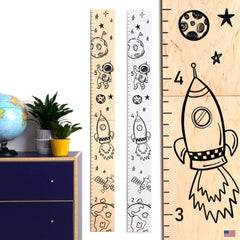
Wooden growth charts designed specifically for tracking height offer a beautiful, permanent way to document development. For families looking to match their nursery decor, a dedicated toddler girl growth chart ensures these milestones are captured on a beautiful, functional piece of art. Unlike pencil marks on walls that disappear with remodeling, a quality chart moves with your family and can be passed down through generations.
Pediatric Visit Records
Your child's medical records provide the most accurate long-term growth tracking. Pediatricians plot measurements on standardized charts, allowing easy visualization of growth patterns. If you are raising a son, you can use these official stats to update your toddler boy growth chart at home, helping you monitor development between annual visits.
Using Professional Tools for Accuracy
To ensure your home measurements are as precise as those in the doctor's office, many parents install a growth chart ruler. This provides a clear, vertical scale that makes it easy to read a toddler height chart accurately, regardless of which wall you choose for your measuring station.
Photo Documentation and Journals
Taking photos at consistent locations creates a visual record that captures personality evolution and style phases. Some parents combine this with growth journals, noting not just measurements but also milestones and memorable moments from each marking session. These narratives add context and emotion to the numerical records, transforming a simple height check into a cherished family tradition.

Final Thoughts
Understanding the average height for 2 year old girl provides helpful context for your daughter's development, but remember that she's growing according to her own unique blueprint. Those measurements you record, whether she's in the 10th percentile or the 90th, document the irreplaceable early years of her life. Every family's growth story deserves to be preserved in ways that honor its significance. The marks climbing higher tell tales of birthday celebrations, first days of preschool, holiday gatherings, and countless ordinary moments that collectively create childhood. These records become touchstones connecting past and present, allowing grown children to show their own kids exactly how tall they were at two years old.
Growth happens whether we measure it or not, but choosing to document it transforms biological development into family history. When you mark your daughter's height, you're not just recording inches, you're capturing time itself, preserving moments that slip away far too quickly.
Frequently Asked Questions About The Average Height For 2 Year Old Girls
What is considered normal growth range for toddler girls?
Normal growth ranges vary widely. For 2-year-old girls, heights between 31.7 and 35.8 inches (5th to 95th percentile) are typical, though healthy children can fall outside this range. Consistent growth along any percentile curve indicates healthy development.
What are the key growth milestones from birth to age 3?
Babies typically grow about 10 inches in year one, 4-5 inches in year two, and continue steady growth in year three. By age 3, the median height is approximately 37.4 inches, though individual variation is completely normal.
What is the average height for a 2 1/2 year old girl?
The median height for a 2 1/2-year-old girl is approximately 35.7 inches, with a typical range extending from about 33.4 to 38.0 inches (5th to 95th percentile), depending on individual genetics and growth patterns.
Why is it important for parents to track their child's growth?
Tracking growth helps identify potential health concerns early while creating meaningful records of childhood. It allows parents and pediatricians to monitor development patterns and ensure children are thriving.
How can you personalize a growth chart to reflect your family's unique story?
Personalized growth charts can feature your family name, meaningful dates, special designs that match your home décor, and become lasting keepsakes that document your children's journey from infancy through adolescence.
When should you consult your pediatrician about your child's growth?
Consult your pediatrician if growth suddenly slows or stops, your child crosses multiple percentile lines, growth concerns appear with other symptoms, or you have any worries about your daughter's development.
Sources:
- CDC. (2024). Using WHO Growth Standard Charts. Growth Chart Training. https://www.cdc.gov/growth-chart-training/hcp/using-growth-charts/who-using.html
- Length velocity. (2024). Who.int. https://www.who.int/tools/child-growth-standards/standards/length-velocity